If you are wondering whether Falmouth is just a summer destination or a place you can truly call home all year, you are not alone. Many buyers and renters love the Cape Cod lifestyle but want to know what everyday life actually looks like once the vacation crowds thin out. In Falmouth, you get a coastal setting with real residential roots, village centers, local amenities, and a strong sense of day-to-day community. Let’s dive in.
Why Falmouth works year-round
Falmouth offers more than a beach-town postcard. It is one of the larger towns on Cape Cod, with an estimated 33,227 residents in 2024 spread across 44.06 square miles of land.
That size matters when you are thinking about year-round living. Instead of feeling built only for summer visitors, Falmouth has the scale, services, and housing base to support everyday life in every season.
The town also has a distinctly coastal identity. According to the town, Falmouth has 68 miles of shoreline, which helps explain why water access, beaches, and boating are such a visible part of local life.
Village life shapes daily living
One of the most important things to understand about living in Falmouth is that it is not centered around one single downtown. Daily life is shaped by village centers, each with its own rhythm and setting.
The Cape Cod Commission housing profile identifies Falmouth and Woods Hole as Community Activity Centers, while town land-use materials point to Main Street in Falmouth Village and Water Street in Woods Hole as older business districts. The town also includes seven historic districts: Davisville, Falmouth Center, North Falmouth, Quissett, Waquoit, West Falmouth, and Woods Hole.
For you as a buyer or renter, that means your experience can vary depending on where you land. Some areas feel more residential and quiet, while others place you closer to shops, waterfront activity, or year-round institutions.
Woods Hole has a unique feel
Woods Hole stands apart from the rest of town in a few key ways. It is home to the Steamship Authority ferry terminal, along with major marine science employers like NOAA Fisheries, the Marine Biological Laboratory, and the Woods Hole Oceanographic Institution.
That mix gives Woods Hole a more research-oriented, maritime character. If you like the idea of a village with ferry access and a strong connection to science and the water, it may feel especially appealing.
Beaches and outdoor access are part of life
If outdoor access is high on your list, Falmouth delivers. The town maintains 10 beaches, and its coastal resources plan notes nine town-owned ocean beaches with more than 3.4 miles of ocean access.
Those beaches include Surf Drive, Old Silver, Chapoquoit, Menauhant, Falmouth Heights, Wood Neck, Megansett, Bristol, and Stony/MBL. For many residents, these are not just summer attractions. They are part of the year-round backdrop for walks, views, and time outside.
Beyond the shoreline, the Shining Sea Bikeway is one of Falmouth’s signature amenities. The town describes it as a 10.7-mile path stretching from County Road in North Falmouth to the Woods Hole ferry terminal, crossing four villages and supporting biking, walking, skating, and cross-country skiing.
That year-round flexibility is a big plus. It gives you a way to stay active and connected to different parts of town without relying only on the beach season.
Everyday amenities support full-time residents
A good year-round community needs more than scenery. Falmouth has a civic backbone that helps support daily routines through every season.
The town’s library system includes the Main Library at 300 Main Street, plus the East Falmouth Library and North Falmouth Library. The Main Library is open six days a week year-round and every day from November to May.
Falmouth also offers recreation programming through the Gus Canty Community Center. The recreation department says its mission is to strengthen community through play, wellness, and connection, which speaks to the kind of practical, year-round infrastructure many buyers want to see.
For people who spend time on the water, the town’s coastal resources plan adds another layer. Falmouth has 24 landings, seven launching ramps, and one public marina, showing how marine access is woven into everyday life here.
Housing in Falmouth: what to expect
If you are considering a move, housing is likely one of your biggest questions. Falmouth is an owner-dominated market, with the Census reporting an 81.6% owner-occupied housing unit rate.
The same Census data shows a median owner-occupied home value of $629,900, a median gross rent of $1,451, and a median household income of $93,043. These numbers offer a broad snapshot, but they also point to an important reality: Falmouth is not a low-cost market.
The Cape Cod Commission’s 2025 housing profile adds even more context. About 82% of residential properties are single-family homes, about 14% are multifamily, and nearly one-third of all housing units are seasonal.
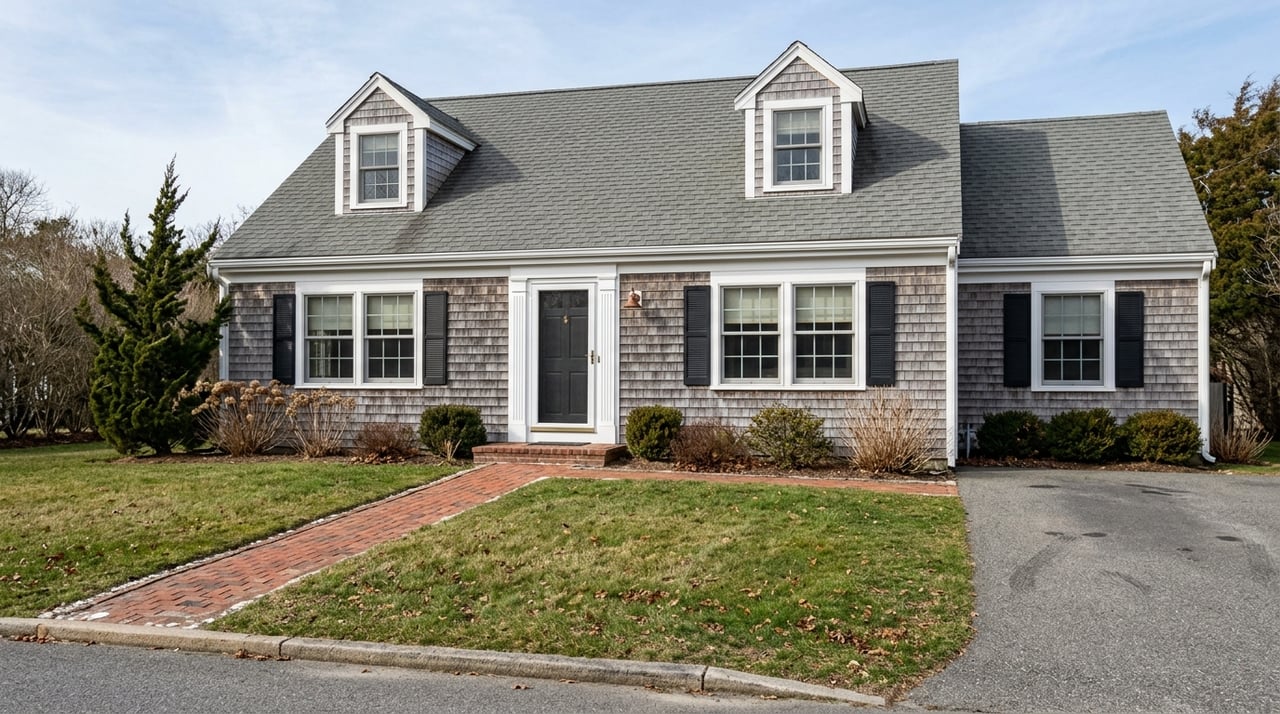
That mix helps explain the overall feel of town. Falmouth generally leans toward established neighborhoods, lower-density living, and a strong single-family home presence rather than dense apartment-style development.
Home prices and affordability
According to the Cape Cod Commission housing profile, the median home sales price in 2023 was $750,000. The same report estimated that a household would need about $224,000 in annual income to afford the median-priced home that year.
That does not mean Falmouth is out of reach for every buyer, but it does mean planning matters. If you are entering this market, it helps to have clear expectations about budget, location tradeoffs, and the type of home that best fits your lifestyle.
Commuting and getting around
Falmouth can work well for local commuting, but it is not a transit-heavy town. The Census reports a mean travel time to work of 24.3 minutes, which suggests many residents can manage daily travel without extreme commute times.
Still, most people should expect a car-oriented routine. That is one of the practical tradeoffs of living in a coastal Cape town with village-based development.
There are transportation options that add flexibility. The Cape Cod Regional Transit Authority serves Falmouth, East Falmouth, and Woods Hole with fixed routes, and the seasonal Whoosh trolley connects Falmouth Mall and Woods Hole.
Woods Hole also gives residents direct access to Martha’s Vineyard. The Steamship Authority provides frequent year-round ferry service, with crossings taking about 45 minutes.
Schools and year-round structure
For households looking for long-term stability, Falmouth has a full local public school system. According to Falmouth Public Schools, the district serves students through seven schools: Falmouth High School, Lawrence School, Morse Pond School, East Falmouth Elementary School, Mullen-Hall School, North Falmouth Elementary School, and Teaticket Elementary School.
That setup can be reassuring if you are moving for full-time living rather than seasonal use. It signals that Falmouth functions as a complete community, not just a destination with limited off-season structure.
What the seasons feel like
One of the biggest lifestyle questions is how Falmouth changes throughout the year. The short answer is yes, there is a real seasonal rhythm.
The Cape Cod Commission profile says summer employment peaked in July at 27% above the February low. That lines up with the town’s large seasonal housing share and its beach-centered geography.
In practical terms, summer tends to bring more activity, more visitors, and a busier overall feel. Winter is generally quieter, which many full-time residents see as part of the appeal.
If you love the idea of living in a place that feels energetic in summer and calmer in winter, Falmouth may strike the right balance. If you want a market with a more constant pace year-round, that seasonal swing is worth thinking through.
Who Falmouth tends to suit
Falmouth often fits people who want coastal living without giving up the basics of year-round community life. You may feel especially at home here if you value beach access, village character, local libraries, recreation options, and a housing stock centered on single-family homes.
It can also be a strong fit if you are comfortable with a mostly car-based routine. While there is bus service, bikeway access, and ferry service, daily life still tends to revolve around driving for many errands and appointments.
For some buyers, that tradeoff is well worth it. You get access to the Cape lifestyle, established neighborhoods, and town amenities in a place that has a real residential base beyond the summer season.
Final thoughts on living in Falmouth
Living in Falmouth year-round means balancing beauty with practicality. You get shoreline, beaches, bikeways, village centers, and community amenities, but you also need to be ready for housing costs, seasonal shifts, and a generally car-oriented routine.
For many people, that balance works. If you are considering a move to Falmouth and want help thinking through neighborhoods, year-round housing options, or the timing of your next step, Kerry Houde can help you navigate the Cape Cod market with clear, local guidance.
FAQs
What is it like living in Falmouth MA year-round?
- Living in Falmouth year-round means enjoying a coastal town with beaches, village centers, libraries, recreation amenities, and a strong residential base, while also adjusting to seasonal changes and a mostly car-based routine.
How expensive is housing in Falmouth MA?
- Census data shows a median owner-occupied home value of $629,900, and the Cape Cod Commission reported a 2023 median home sales price of $750,000, so housing costs are a major factor for many buyers.
Is Falmouth MA a seasonal town or a full-time community?
- Falmouth has a noticeable seasonal rhythm, but it is also a full-time community with nearly 14,600 year-round occupied housing units, public schools, libraries, recreation services, and village-based daily life.
How do most people get around in Falmouth MA?
- Most residents rely on a car for daily errands and commuting, though Falmouth also has CCRTA bus service, the seasonal Whoosh trolley, the Shining Sea Bikeway, and year-round ferry access from Woods Hole to Martha’s Vineyard.
What kinds of homes are common in Falmouth MA?
- The housing stock is mostly single-family homes, which make up about 82% of residential properties, with a smaller share of multifamily housing and a significant number of seasonal homes.
Does Falmouth MA have public beaches and outdoor amenities?
- Yes, the town maintains 10 beaches and offers major outdoor amenities like the Shining Sea Bikeway, along with public landings, boat ramps, and a public marina.