Trying to choose between Sandwich and Bourne for your first Cape home? You are not alone. For many first-time buyers, the real question is not which town is “better,” but which tradeoffs fit your budget, commute, and day-to-day life. If you are weighing these two Upper Cape options, this guide will help you compare home prices, taxes, housing types, and overall feel so you can make a more confident decision. Let’s dive in.
Start With the Big Picture
Sandwich and Bourne are nearly identical in population size, with the latest Census estimates showing 20,507 residents in Sandwich and 20,508 in Bourne. That means your decision is not really about choosing a bigger or smaller town.
Instead, the difference comes down to how each market functions. Sandwich tends to feel more owner-occupied and village-oriented, while Bourne often stands out for easier mainland access and somewhat lower carrying costs.
Compare Home Prices First
For most first-time buyers, price is the first filter. Based on Cape Cod Commission data, the 2024 median home sales price was $732,000 in Sandwich and $635,000 in Bourne.
Both towns eased slightly in 2025, but the gap remained. Median prices were $707,500 in Sandwich and $610,000 in Bourne, which still leaves Bourne about $97,500 lower.
That difference matters when you are thinking about your down payment, your monthly payment, and how much flexibility you want after closing. If your budget already feels tight, Bourne may give you a little more room to work with.
Look Beyond Price to Monthly Costs
Purchase price is only part of the story. Property taxes also shape what homeownership feels like month to month.
Sandwich’s FY25 residential tax rate is $10.57 per $1,000 of assessed value, while Bourne’s is $7.81. When you pair that lower tax rate with a lower median sale price, Bourne often comes out as the lower-carrying-cost option.
For first-time buyers, this is a big deal. A home that seems only slightly more expensive on paper can feel much more expensive once taxes are added into your monthly budget.
Understand the Affordability Challenge
It is important to go into either market with clear expectations. According to the Cape Cod Commission, the estimated annual household income needed to afford the median-priced home is $233,000 in Sandwich and $196,000 in Bourne.
Both numbers are well above each town’s local median household income. In plain terms, neither Sandwich nor Bourne should be viewed as an easy entry-level market.
That does not mean buying is impossible. It means your search may need to stay focused, realistic, and flexible on home type, size, or exact location.
Housing Types: What You Are More Likely to Find
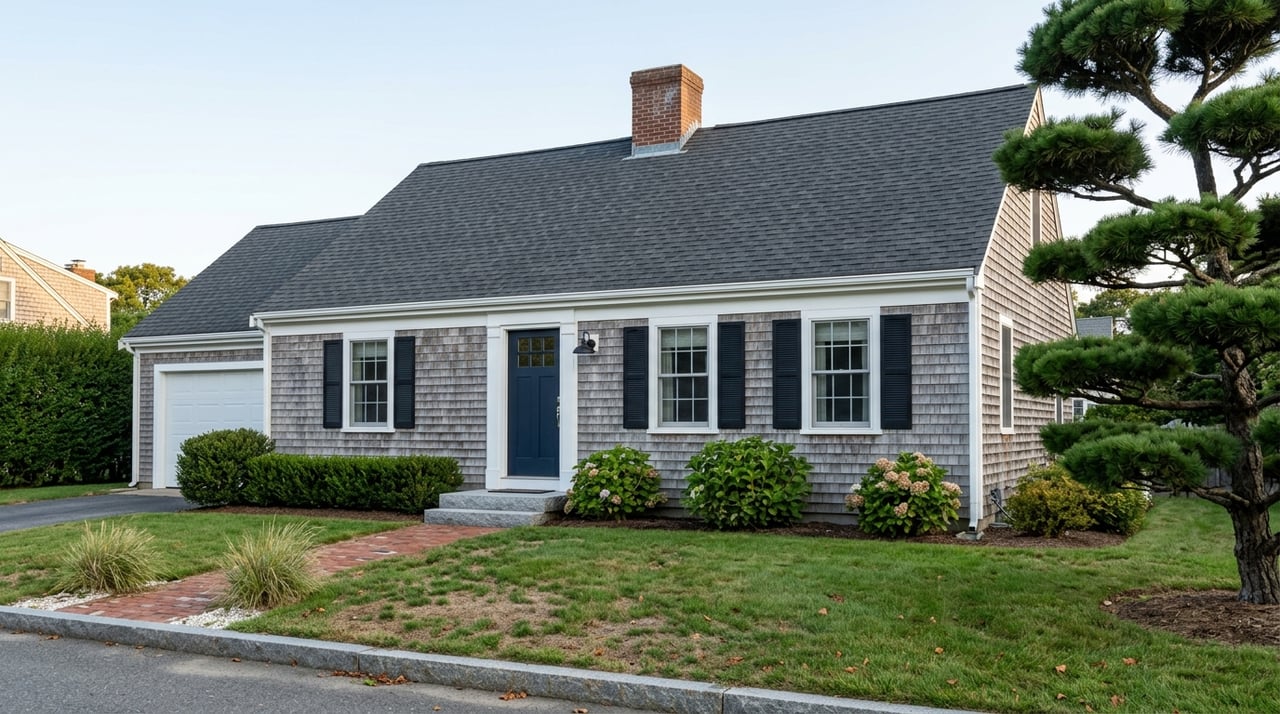
The kind of home you want should also guide your decision. Sandwich leans heavily toward detached single-family housing, with about 90% of residential properties in that category and only about 7% classified as multifamily.
Bourne is also mostly single-family, but it has a much larger multifamily share at 22%. For a first-time buyer, that can translate into more options if you are open to condos, townhome-style living, or other attached housing types.
This is one of the clearest practical differences between the two towns. If you want the widest range of entry points, Bourne may offer more flexibility in the product mix.
Sandwich Has a More Owner-Occupied Feel
If neighborhood stability and an owner-occupied feel matter to you, Sandwich has an edge in the data. The Census reports an owner-occupied housing rate of 89.2% in Sandwich, compared with 75.8% in Bourne.
Seasonal housing also appears lower in Sandwich. The Cape Cod Commission estimates seasonal housing at 13% in Sandwich and about 17% in Bourne.
That does not mean one town is right and the other is wrong. It simply means Sandwich may appeal more to buyers who want a market that reads as less seasonal and more full-time residential.
Commute and Bridge Access Matter
If you expect to drive off-Cape regularly, Bourne has a practical location advantage. The town describes itself as the gateway to Cape Cod and notes that both the Bourne and Sagamore bridges are in town.
Sandwich sits east of Bourne on the peninsula, so getting to the mainland often starts with a bit more travel. Census data also shows a modest commute edge for Bourne, with a mean travel time to work of 26.0 minutes compared with 27.5 minutes in Sandwich.
That said, bridge access is not always simple. The Cape Cod Commission notes that the bridges program is active, and maintenance work can affect travel patterns, including planned lane restrictions on the Bourne Bridge from April 27 through May 20, 2026.
Town Feel: Historic Village or Canal Gateway?
Numbers matter, but so does how a place feels when you live there. Sandwich describes itself as the oldest town on Cape Cod and highlights its quiet New England character, seaside setting, marina, museums, and public beaches.
That identity often appeals to buyers who picture a classic Cape setting with village character and shoreline access. Sandwich’s beach and village areas, including Town Neck Beach, the Boardwalk area, East Sandwich Beach, and freshwater spots like Snake Pond and Wakeby Lake, support that image.
Bourne has a different kind of draw. The town centers much of its identity around the canal, harbors, inlets, and its role as a gateway community.
If you like the idea of canal access, varied recreation areas, and easier mainland connection, Bourne may feel more practical and more spread out in how it offers coastal living. The town also manages nine public bathing beaches, including several with accessibility mats, and highlights spaces like Buzzards Bay Park with canal path access.
Historic Homes in Sandwich Come With a Tradeoff
If older homes and historic character are high on your wish list, Sandwich may naturally rise to the top. Many homes there were built between 1950 and 1999, and the town has a stronger historic identity overall.
Still, there is one practical point to keep in mind. Some Sandwich properties fall within the Old King’s Highway Historic District, where exterior changes are reviewed for compatibility with historic character.
For some buyers, that is a plus because it helps preserve the look of the area. For others, it is a limitation because future exterior changes may require added review.
Rentals Are Limited in Both Towns
Some first-time buyers start by renting while they learn the market. That can be a smart strategy, but the Cape Cod Commission notes that year-round rental housing is very limited in both Sandwich and Bourne.
If you are considering a rent-first approach, it is wise to plan early and stay flexible. In a tight market, timing and quick decision-making often matter.
Which Town Fits You Best?
If you want the shortest version, here it is: Bourne is often the more commuter-friendly and lower-carrying-cost choice, while Sandwich is often the more historic and beach-village choice.
That summary is useful, but your real answer depends on what matters most to you. Start with your non-negotiables and then compare them honestly against each town’s tradeoffs.
Bourne may fit you better if you want:
- A lower median home price
- A lower residential tax rate
- Easier access to the bridges and mainland travel
- More flexibility in housing types, including more multifamily options
- A canal-centered, practical Upper Cape location
Sandwich may fit you better if you want:
- A more historic Cape feel
- A stronger owner-occupied market profile
- A village-and-beach atmosphere
- More focus on detached single-family homes
- A setting that feels more tied to classic Cape character
A Smart First-Buyer Approach
When buyers compare Sandwich and Bourne, I usually recommend focusing on three things first: budget, commute, and housing type. Those are the factors most likely to affect your daily life and your stress level after you move in.
From there, think about lifestyle. Do you want historic character and a village feel, or do you want easier access off-Cape and a more budget-conscious path into homeownership?
There is no universal right answer. There is only the answer that works best for your season of life, your finances, and your goals.
If you are trying to sort through the options, compare homes, or build a realistic first-time buyer plan for the Upper Cape, Kerry Houde can help you make sense of the market with calm, local guidance.
FAQs
Is Bourne or Sandwich more affordable for first-time buyers?
- Bourne is generally more affordable based on current median sales price and property tax rate data, though both towns remain high-cost markets by local income standards.
Is Sandwich or Bourne better for commuting off Cape Cod?
- Bourne usually has the practical edge for off-Cape driving because both the Bourne and Sagamore bridges are in town, though bridge maintenance and traffic can still affect travel.
Does Sandwich have more single-family homes than Bourne?
- Yes. Cape Cod Commission data shows Sandwich has a higher share of detached single-family housing, while Bourne has a larger multifamily share.
Is Sandwich more historic than Bourne?
- Sandwich has a stronger historic identity in how the town presents itself, and some properties are also subject to Old King’s Highway Historic District exterior review.
Are year-round rentals easier to find in Sandwich or Bourne?
- Year-round rental housing is very limited in both towns, so renters and rent-first buyers should expect a competitive search.
Which town has a more owner-occupied housing market, Sandwich or Bourne?
- Sandwich does. Census data shows a higher owner-occupied housing rate in Sandwich than in Bourne.